CarouselDeep Learning
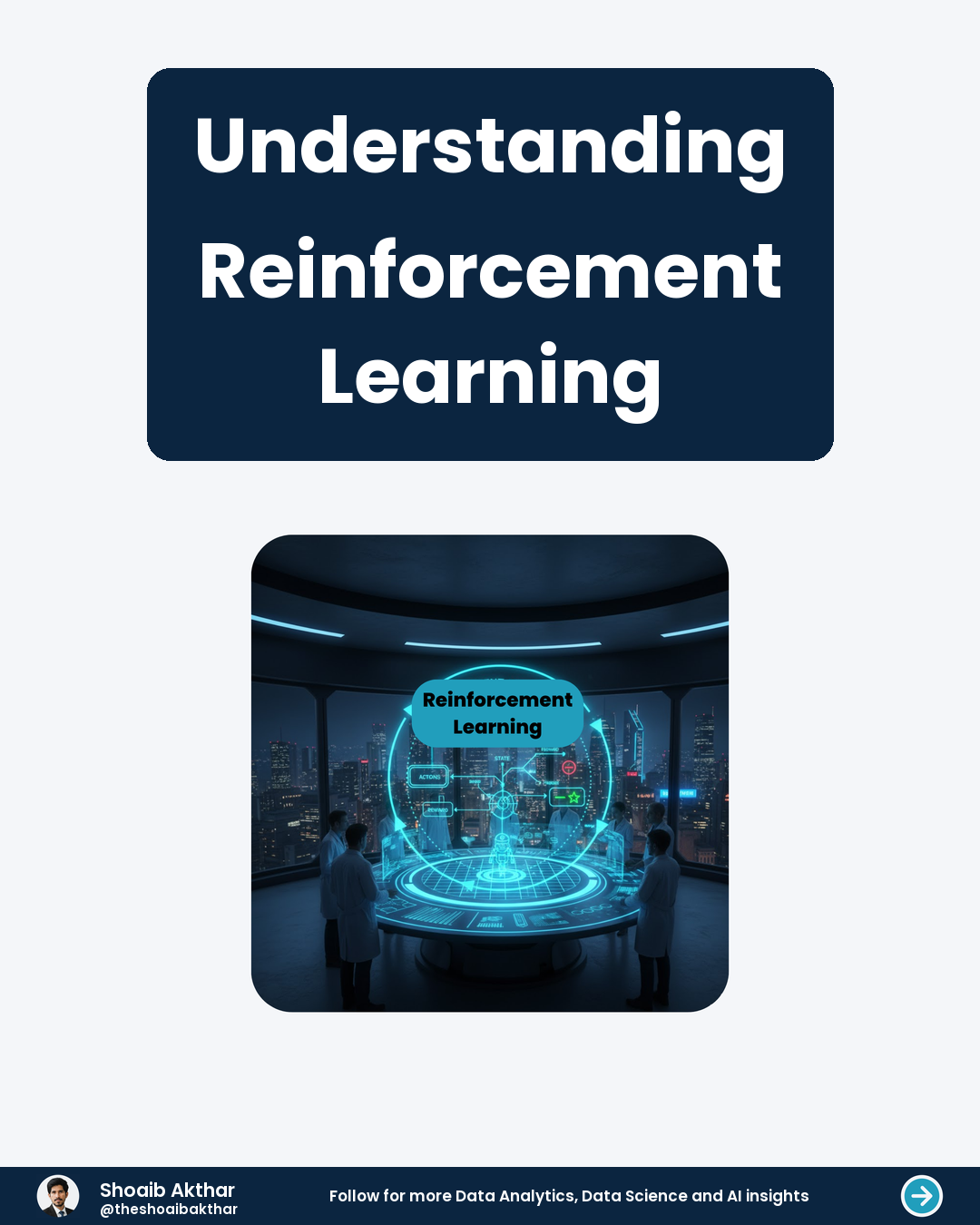
Understanding Reinforcement Learning
Reinforcement Learning is a type of machine learning. It focuses on training agents to make decisions in an environment.
 1 / 10
PDF not showing? Open it in a new tab.
Read it as text
The full carousel content, slide by slide.
01What is RL?
- Reinforcement Learning is a type of machine learning.
- It focuses on training agents to make decisions in an environment.
- The agent learns by interacting with the environment.
- The goal is to maximize a reward signal.
- It's about trial and error to find the best strategy.
02Key Components
- Agent: The learner or decision-maker.
- Environment: The world the agent interacts with.
- Actions: What the agent can do.
- State: The current situation of the environment.
- Reward: Feedback the agent receives after an action.
- Policy: The strategy the agent uses to choose actions.
03The Learning Process
- The agent observes the current state of the environment.
- It selects an action based on its current policy.
- It receives a reward (positive or negative).
- The agent updates its policy based on the reward.
- This happens repeatedly over many interactions.
04Reward Signals
- Rewards can be positive (encouraging behavior).
- Rewards can be negative (discouraging behavior).
- The reward signal guides the agent's learning.
- Careful design of rewards is crucial.
05Exploration vs. Exploitation
- Exploration: Trying new actions to discover better strategies.
- Exploitation: Using the current best policy to maximize rewards.
- Balancing exploration and exploitation is important.
- Too much exploration can waste time.
- Too much exploitation can get stuck in local optima.
06Common Algorithms
- Q-Learning: Learns a value function for each state-action pair.
- SARSA: Uses the current policy to determine the next action.
- Deep Q-Networks (DQN): Uses deep neural networks to approximate the Q-function.
- Policy Gradients: Directly optimizes the policy.
07Applications of RL
- Game playing (AlphaGo, Atari games).
- Robotics (navigation, manipulation).
- Finance (trading, portfolio optimization).
- Healthcare (treatment planning).
- Recommender systems.
08Future of RL
- Continues to be a rapidly growing field.
- Potential for solving complex real-world problems.
- Advancements in algorithms and hardware are driving progress.
- Expect to see more widespread adoption in diverse industries.