CarouselDeep Learning
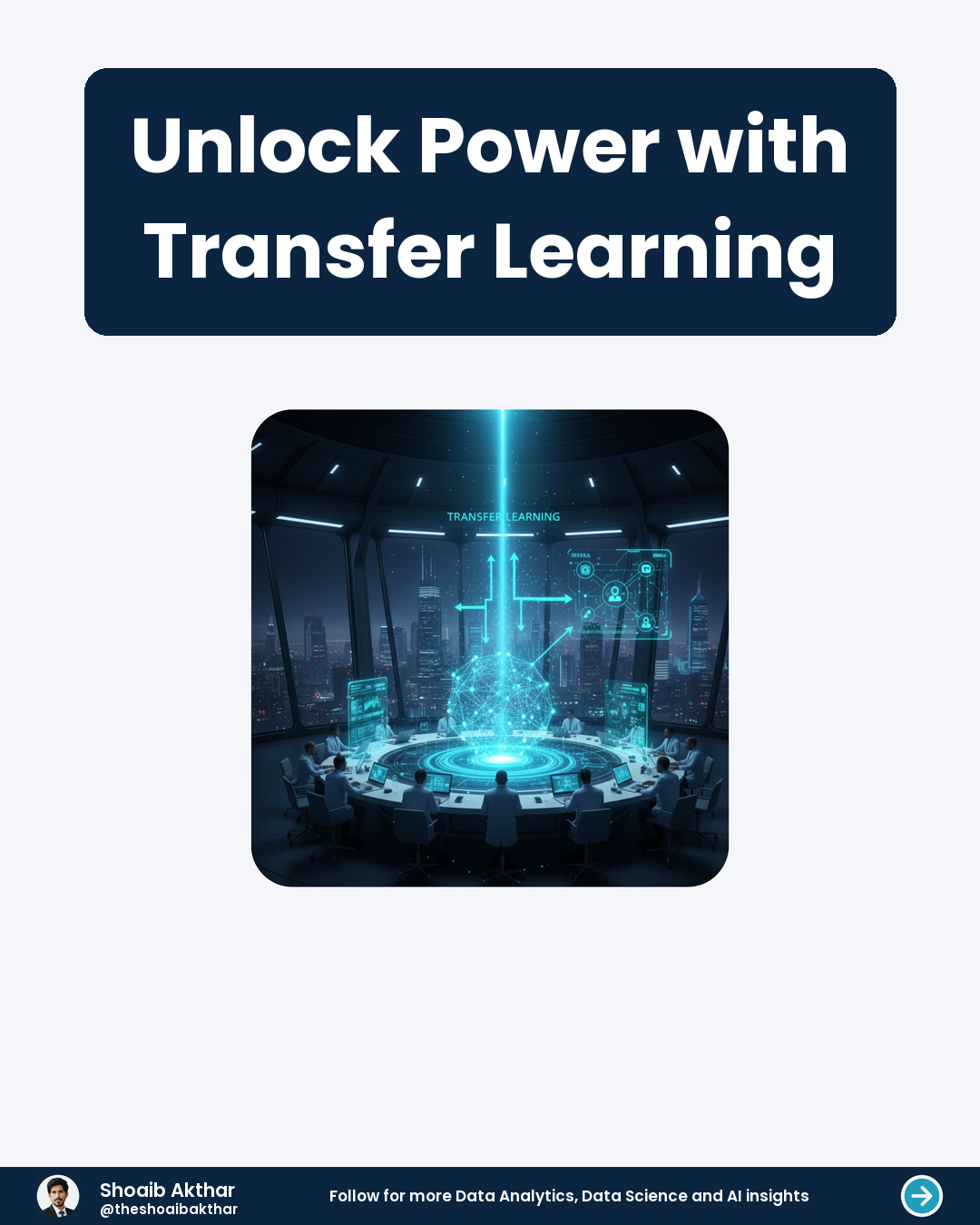
Unlock Power with Transfer Learning
What is Transfer Learning? It’s learning from one task to another.
 1 / 10
PDF not showing? Open it in a new tab.
Read it as text
The full carousel content, slide by slide.
01What is Transfer Learning?
- It’s learning from one task to another.
- Instead of training from scratch, reuse knowledge.
- Saves time and resources.
- Improves performance, especially with limited data.
- Makes models more efficient.
- Think of it like learning to ride a bike, then a scooter.
02Why is it Useful?
- Data is often scarce for new tasks.
- Pre-trained models offer existing knowledge.
- Faster development cycles.
- Better accuracy on smaller datasets.
- Allows for more complex models with less data.
- Reduces the need for extensive data collection.
03Common Transfer Learning Methods
- Fine-tuning: Adjust weights of pre-trained model.
- Feature Extraction: Use pre-trained model as feature extractor.
- Domain Adaptation: Adapt model to new domain.
- Multi-task Learning: Train on multiple tasks simultaneously.
- Few-shot Learning: Learn from very few examples.
- Zero-shot Learning: Classify without examples.
04Fine-tuning Explained
- Start with a pre-trained model.
- Train it further on your specific data.
- Adjust existing weights, generally with a lower learning rate.
- Helps the model adapt to your task's nuances.
- Can benefit from a combination of layers fine-tuned.
- Requires careful hyperparameter tuning.
05Feature Extraction Process
- Freeze the weights of the pre-trained model.
- Use the model to extract features from your data.
- Train a separate classifier on these extracted features.
- Faster training compared to fine-tuning.
- Useful when your dataset is very small.
- Focuses on understanding data patterns.
06Challenges & Considerations
- Data similarity is important.
- Pre-trained model might not be suitable.
- Overfitting can occur if not carefully managed.
- Computational resources needed for fine-tuning.
- Choosing the right pre-trained model is crucial.
- Evaluation on independent test data is essential.
07Popular Pre-trained Models
- ImageNet models (ResNet, VGG, Inception).
- BERT for natural language processing.
- GPT models for text generation.
- Stable Diffusion for image generation.
- These models have been trained on massive datasets.
- Ready to be adapted to a wide variety of tasks.
08The Future of Transfer Learning
- Continual learning towards adapting to new data.
- Self-supervised learning enhancing knowledge transfer.
- More specialized pre-trained models.
- Increased accessibility to pre-trained models.
- Integration with AutoML platforms for ease of use.
- Transfer learning will continue to revolutionize machine learning.